
The story
Two white wings joined by a corridor, and gilded ceilings above the jewels of Muhammad Ali’s family.
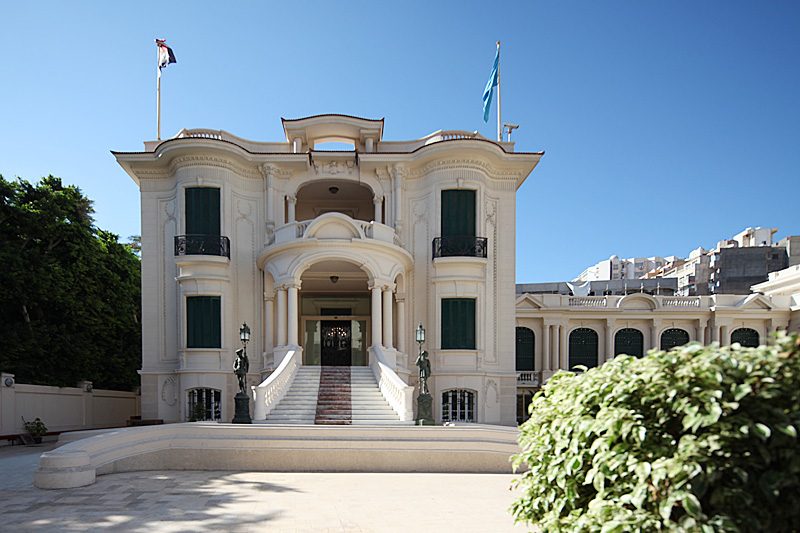
- 1The east and west wings and the corridor between them
- 2The gilded ceilings and mosaics
- 3Muhammad Ali’s collar of diamonds and emeralds
- 4The gold chessboard set with diamonds
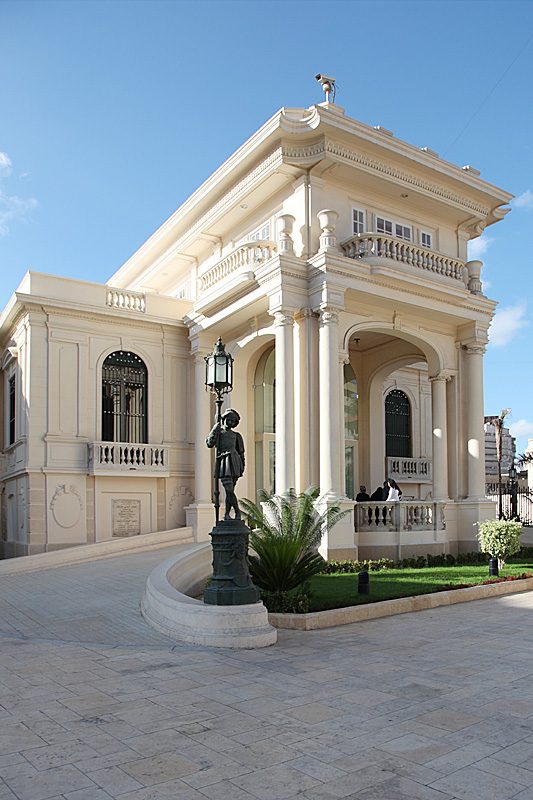
The Royal Jewelry Museum occupies the palace of Princess Fatma al-Zahra’, daughter of Prince Ali Haider, a descendant of Muhammad Ali Pasha. The sources differ on who built it: the Ministry of Tourism and Antiquities says Zaynab Fahmi built it in 1919; the Alexandria Governorate says Zainab Hanem Fahmy founded it in 1919 and her daughter completed it and lived there in 1923; the Presidency credits the princess, Fatma Haidar, herself.
Read more
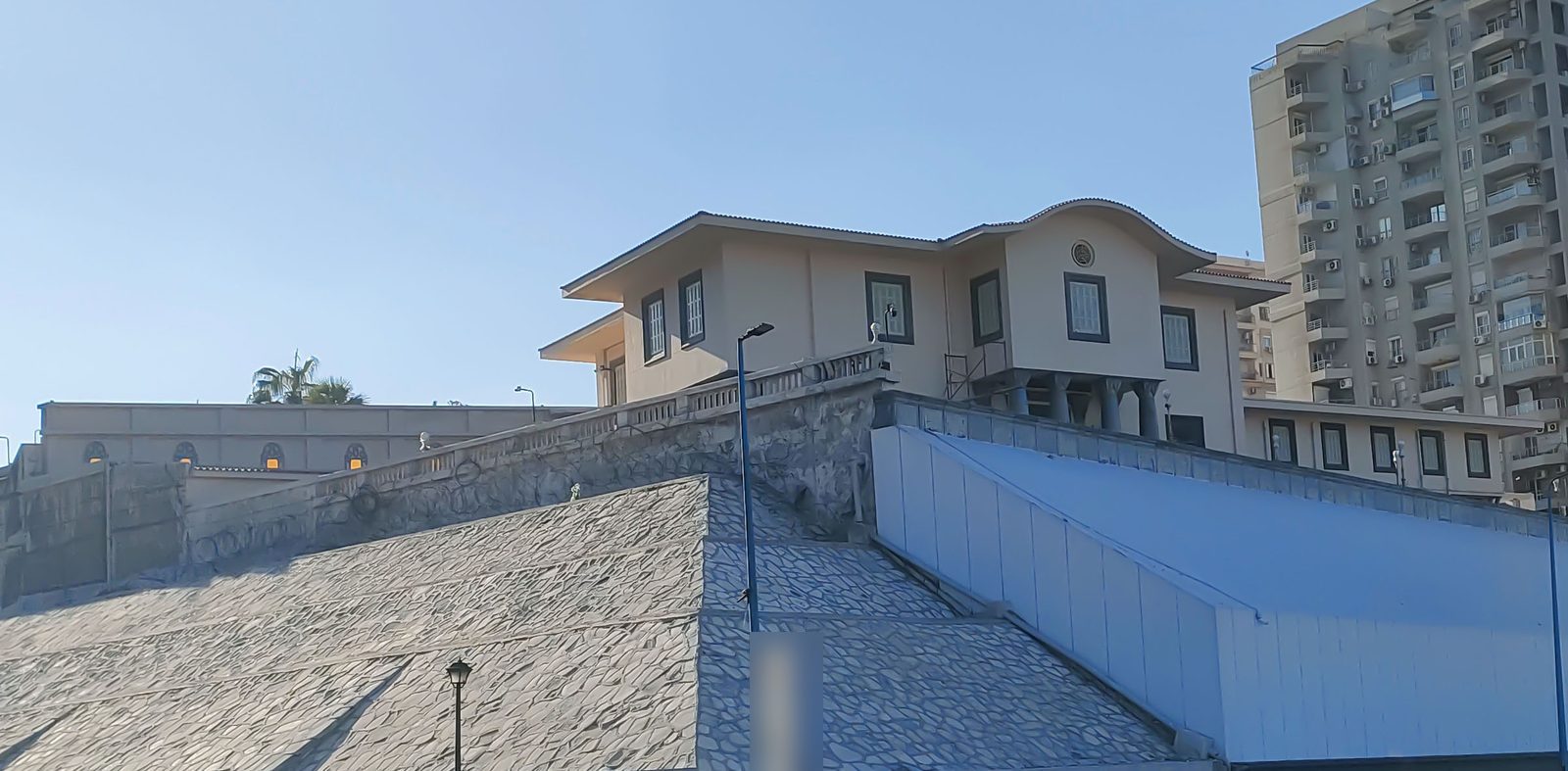
The palace has two wings, east and west, each with two floors and a basement, joined by a corridor and set in a garden. The ministry describes it as a blend of European and Islamic styles, with paintings, gilded ceilings and mosaics. According to the governorate, the princess stayed until she gave the palace to the government in 1964; it then served as a presidential rest house until a presidential decree made it a museum in 1986.
The governorate puts the collection at about 11,500 pieces that belonged to members of the royal family, among them a gold snuffbox bearing Muhammad Ali’s name, a gold chessboard set with diamonds, and a platinum and diamond tiara of Princess Shwikar, King Fuad’s wife. The ministry names a collar set with diamonds and emeralds that belonged to Muhammad Ali Pasha among its exhibits.